0%

China’s orthopedic implant market includes manufacturers of hip and knee replacements, trauma plates, spinal systems, and surgical instruments. Comparing them takes more than scanning a product catalog. A polished implant is only the visible part. Behind it are material controls, machining tolerances, sterilization records, and evidence from clinical use.

Biomedical engineer Steven M. Kurtz, known for research on orthopedic biomaterials, offers a useful perspective through his work: implant performance should be assessed over time, not inferred from material claims alone. That principle helps frame any review of orthopedic implant manufacturers in China. Look for specific, verifiable information: product indications, quality-system certifications, traceability, clinical data, and the support available to surgeons and hospitals. Details matter. A certificate is not a substitute for outcome evidence, and a broad product range does not prove consistent quality. Company size and export reach can offer context, but neither guarantees clinical suitability.

This guide introduces notable Chinese manufacturers and the factors that distinguish their portfolios and capabilities. It is not a definitive ranking; public information varies, and product lines change. Some comparisons will remain imperfect. That is worth acknowledging. Readers should confirm current certifications and product details directly with manufacturers and assess devices against local clinical requirements. The aim is a clearer starting point, not a shortcut to a purchasing decision.
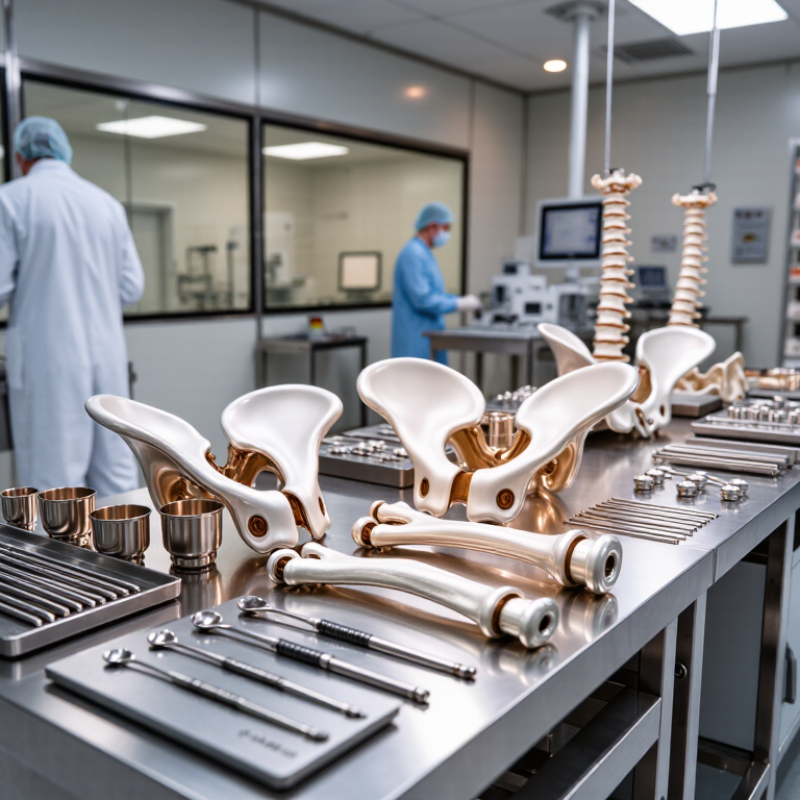
Who Are the Top Orthopedic Implant Manufacturers in China?

What Orthopedic Implants Are and How the Chinese Market Is Defined

Orthopedic implants are medical devices placed in or on the body to support, replace, or stabilize damaged bones and joints. Common examples include hip and knee components, fracture plates, screws, spinal fixation systems, and artificial joints. A surgeon may select a device based on the patient’s anatomy, bone quality, age, activity level, and the planned procedure. Fit matters. So does how the implant performs under repeated movement and load.

China’s orthopedic implant market includes domestic manufacturers, overseas suppliers, hospitals, distributors, and specialist service providers. It is not one uniform market. Product categories differ in design, materials, manufacturing requirements, and clinical use. A hip implant, for example, faces different demands from a small bone screw. Buyers and clinicians also consider clinical evidence, manufacturing consistency, traceability, technical support, and applicable registration requirements. These factors shape how products are evaluated and supplied. Market boundaries can be blurry, particularly when companies offer several device types or work through local partners. That distinction is worth checking rather than assuming. Public product descriptions alone may not reveal how a device is used in practice, and clinical decisions remain specific to each patient and care team.

How to Assess Leading Orthopedic Implant Manufacturers

Assessing leading orthopedic implant manufacturers in China requires more than comparing catalogues or quoted prices. Start with product-level evidence: implant materials, fatigue and wear testing, sterilization validation, and traceability from raw material to the finished device. Ask for registration documentation and audit records, then check whether testing matches the implant’s intended use. A certificate alone is not proof of consistent performance.

Clinical evidence matters. Review follow-up periods, patient numbers, revision rates, and how outcomes were measured; short studies can miss later failures. OECD’s Health at a Glance 2023 reports wide differences in hip and knee replacement rates across countries, a reminder that results depend on patient populations and care systems. Compare like with like. It is easy to overlook.

Price also needs context. China’s National Healthcare Security Administration reported average price reductions of about 82% in its 2021 national artificial-joint procurement results. Lower prices may improve access, but they do not establish durability or surgical fit. Ask manufacturers for batch-level quality data, complaint handling times, and local technical support. Then speak with surgeons who use the implants and inspect sample packaging, labeling, and instrument sets. Small details matter. And records can be uneven. That deserves scrutiny.

China’s Orthopedic Implant Industry and Its Major Product Categories

China’s orthopedic implant industry covers several distinct clinical needs. Major product categories include trauma fixation devices, joint replacements, spinal systems, and sports medicine implants. Trauma products include plates, screws, and intramedullary nails used to stabilize fractures. Hip and knee implants replace damaged joint surfaces, while spinal devices support selected procedures involving the vertebrae. Product choice depends on the patient, anatomy, surgical plan, and clinician judgment.

Manufacturers differ in their material options, instrument systems, size ranges, and production controls. Common implant materials include titanium alloys and medical-grade stainless steel, though suitability depends on the device and its intended use. Hospitals may assess design documentation, sterilization information, traceability, and compatibility with imaging and surgical workflows. These details matter. A catalog description alone cannot show how a device performs in a specific case, and available evidence may vary across product types.

Tips: Compare the intended use, dimensions, material, and supporting clinical information. Ask qualified surgical and procurement teams to review fit and documentation together. Small details can be missed. A careful review is worth the extra time.

Profiles of Notable Orthopedic Implant Manufacturers in China

China’s orthopedic implant sector includes manufacturers with different strengths, rather than one clear profile. Some established producers focus on hip and knee replacements, offering components in multiple sizes for different patient anatomies. Others concentrate on trauma fixation, such as plates, screws, and intramedullary nails. These products require precise machining and dependable material documentation.

Specialist manufacturers may focus on spinal devices, surgical instruments, or porous metal components designed to support bone integration. Their production capabilities can differ considerably. A polished catalogue alone is not enough. Buyers and clinicians should examine technical specifications, manufacturing controls, traceability, sterilization information, and relevant product registration documents. Details matter.

A useful manufacturer profile also considers practical support: instrument availability, training resources, and responsiveness when product questions arise. Public information can be uneven, so comparisons should rely on verifiable records rather than broad claims about leadership. One limitation is that product range does not prove clinical performance. Independent evidence and careful evaluation remain important.

How Regulation, Innovation, and Global Reach Shape Company Standing

Regulatory readiness often reveals how an orthopedic implant manufacturer manages quality beyond marketing claims. In China, manufacturers need to align product development, clinical evidence, production controls, and post-market monitoring with applicable requirements. Reliable companies can trace a component from incoming titanium stock to a finished implant and its inspection record. Small details matter. Clear labeling, consistent sterilization records, and prompt responses to complaints help hospitals assess risk. Yet paperwork alone proves little; buyers should examine current certificates, audit scope, and evidence relevant to each device category.

Innovation is useful when it solves a surgical problem, not merely when a design looks newer. Instruments that improve placement accuracy or implants tested for fatigue can support clinical decisions, but performance claims need transparent methods and appropriate data. One overlooked test is whether surgeons can use the system consistently across different cases. Global reach adds another measure: service teams, stable supply, and clear technical documentation matter after an export shipment. Market presence is not the same as dependable support. A manufacturer may serve many countries while still learning how local hospitals train staff and manage inventory. This is an imperfect comparison, but it is worth asking.

China’s population aged 65 and above increased from 13.5% in 2020 to 15.6% in 2024. This demographic trend is a measurable demand driver for orthopedic implants, while company standing is also shaped by regulatory compliance, product innovation, and international market access. The chart presents industry context rather than company or brand rankings.

Source: National Bureau of Statistics of China, annual national economic and social development reports; 2020 figure from the Seventh National Population Census.

FAQS

What are orthopedic implants used for?

Orthopedic implants support, replace, or stabilize damaged bones and joints. Examples include hip components, knee components, plates, screws, and spinal systems. Fit matters greatly.

How is the orthopedic implant market in China structured?

It includes domestic manufacturers, overseas suppliers, hospitals, distributors, and specialist service providers. The market is divided by product type and clinical use. Boundaries can remain unclear.

What factors influence implant selection?

Surgeons may consider anatomy, bone quality, age, activity level, and the planned procedure. Implant performance under repeated movement also matters. One choice rarely suits every patient.

What product categories do Chinese manufacturers commonly provide?

Some produce hip and knee replacements. Others focus on trauma plates, screws, and intramedullary nails. Specialist companies may provide spinal devices, surgical instruments, or porous metal components.

How should buyers evaluate an implant manufacturer?

Buyers should review technical specifications, manufacturing controls, traceability, sterilization records, and registration documents. They should also check instrument availability and training support. A polished catalogue proves little.

Why is traceability important for orthopedic implants?

Traceability can connect incoming material, production steps, inspections, and the finished implant. For example, titanium stock should link to a documented inspection record. Missing records create uncertainty.

Does regulatory readiness prove a manufacturer is reliable?

Not completely. Current certificates, audit scope, clinical evidence, and product-specific documentation require careful review. Paperwork alone proves little. That limitation is easy to overlook.

How can innovation improve orthopedic implant performance?

Useful innovation should solve a surgical problem. Improved placement instruments or fatigue-tested implants may support better decisions. New-looking designs are not automatically better.

What support matters after implants are exported?

Hospitals may need technical documents, training, stable supply, and responsive service teams. Inventory management also matters. International reach does not guarantee dependable local support.

Conclusion

China’s orthopedic implant industry has become an important part of the global medical device market, covering products such as joint replacements, spinal systems, trauma fixation devices, sports medicine implants, and dental or craniofacial solutions. This overview explains how orthopedic implants are defined and how the Chinese market is shaped by clinical demand, hospital procurement, manufacturing capacity, and patient needs. It also introduces practical criteria for evaluating leading orthopedic implant manufacturers, including product quality, research capability, production consistency, regulatory compliance, clinical support, and after-sales service.

The discussion further examines the industry’s major product categories and the characteristics of notable manufacturers without focusing on individual brand names. It highlights how regulatory approval, material science, digital manufacturing, surgeon collaboration, and investment in innovation influence company standing. In addition, international certifications, export experience, supply-chain reliability, and the ability to adapt products to different healthcare systems are key factors in assessing global reach. Together, these elements provide a balanced framework for understanding competition and development within China’s orthopedic implant sector.

Ethan

Ethan

Ethan is a professional marketing specialist dedicated to helping businesses understand products, markets, and practical solutions through clear, reliable, and engaging communication. With a strong knowledge of the company’s offerings, he regularly contributes expert articles to the company......