0%

Choosing an orthopedic implants manufacturer is a clinical and supply decision, not just a price comparison. Buyers must weigh implant materials, design options, quality systems, clinical evidence, and dependable delivery. The details matter: a hip stem must match a patient’s anatomy, while a knee component must support stable movement and fit the surgeon’s technique.

Demand is substantial. The World Health Organization reports that about 1.71 billion people worldwide live with musculoskeletal conditions. Grand View Research estimated the global orthopedic implants market at approximately US$47.7 billion in 2023 and projected continued growth through 2030. These figures describe broad market estimates, not guaranteed sales or clinical outcomes. Still, they help explain why buyers face a crowded field of established brands and newer suppliers.

Evidence deserves close attention. Orthopedic surgeon and researcher Daniel J. Berry’s published work offers a practical reminder: outcomes depend on patient selection and surgical technique as well as implant design. That is a paraphrase, not a direct quotation. No implant fits every patient. This guide compares ten manufacturers through factors global buyers can investigate, including product portfolios, manufacturing capabilities, regulatory documentation, and support after purchase. Company claims should be checked against current product records and independent clinical evidence. A polished brochure is not proof. The right shortlist begins with the procedure, the patient population, and the evidence required by the purchasing team.
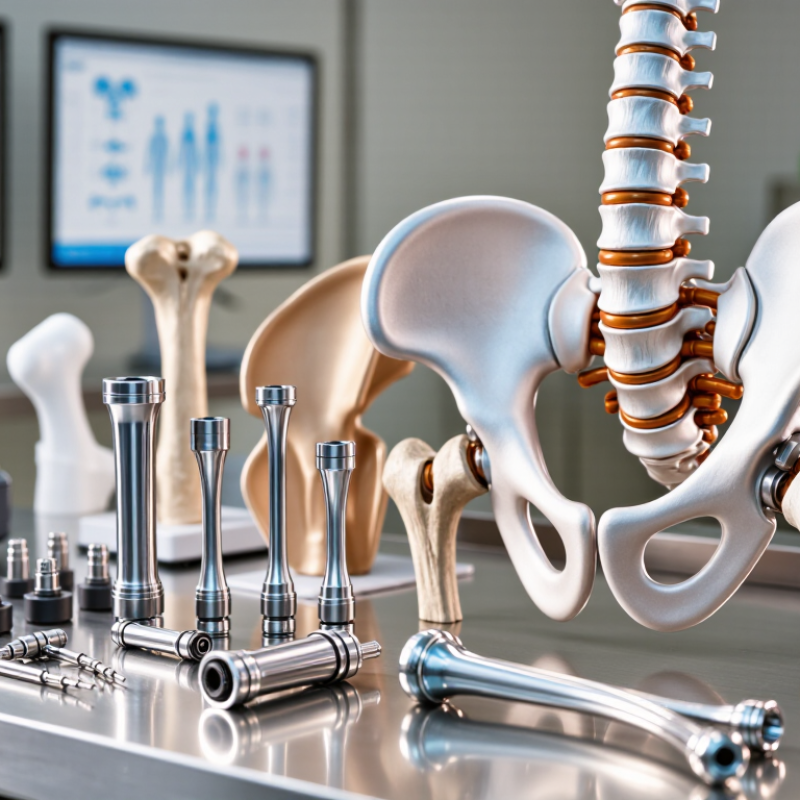
Top 10 Orthopedic Implants Manufacturers for Global Buyers

What Orthopedic Implants Are and Which Products They Include

Top 10 Orthopedic Implants Manufacturers for Global Buyers

What Orthopedic Implants Are and Which Products They Include

Orthopedic implants are medical devices placed inside or around the body to restore movement, stabilize bone, or replace damaged joints. They may be temporary or designed for long-term use. Common products include hip and knee replacements, spinal cages, trauma plates, screws, intramedullary nails, and external fixation systems. Some also include shoulder, ankle, and sports-medicine implants.

The World Health Organization reports that musculoskeletal conditions affect about 1.71 billion people worldwide. This demand creates a broad, technically demanding market. Joint replacements use materials such as titanium alloys, cobalt-chromium alloys, stainless steel, ceramics, and medical-grade polymers. Material choice affects strength, wear, imaging compatibility, and patient response.

Small details matter.

A trauma plate must fit bone contours closely. A spinal implant needs reliable geometry and controlled surface properties. According to the U.S. Food and Drug Administration, many orthopedic devices require evidence of safety, performance, labeling, and manufacturing controls before market access. Buyers should therefore review material certificates, sterilization records, traceability, and clinical evidence, not only product catalogs.

The boundaries are not perfectly tidy. Product names and regulatory classifications can differ between countries. A component accepted for one surgical technique may not suit another. Experienced buyers compare dimensions, testing standards, surgeon feedback, and after-sales support before selecting an orthopedic implant manufacturer.

How Global Buyers Can Evaluate Orthopedic Implant Manufacturers

Global buyers should evaluate orthopedic implant manufacturers through evidence, not polished catalogs. The orthopedic devices market reached about USD 47 billion in 2023, according to Fortune Business Insights’ 2024 market report. This growth increases supplier choice, but it also raises due diligence risks. Ask for ISO 13485 certification, regulatory approvals, sterilization records, and traceability from raw material to finished implant. A reliable manufacturer should explain its audit findings clearly.

Clinical evidence matters more than production volume. Review peer-reviewed studies, revision rates, implant survival, and the length of patient follow-up. Grand View Research reported continued expansion in orthopedic devices, driven partly by aging populations and procedure demand. That trend does not prove every product is clinically suitable. Request evidence for the exact implant design, material, and intended anatomy. General company statistics can hide important gaps.

Manufacturing capability should be tested on-site or through an independent audit. Inspect machining tolerances, surface treatment controls, packaging integrity, and complaint handling. Also examine capacity planning, delivery records, and backup suppliers for critical materials. Total cost includes training, instrumentation, freight, regulatory maintenance, and possible revisions. Low pricing can be misleading. No scorecard is perfect. Buyers should record unanswered questions and reassess suppliers after market feedback, not only after the first successful shipment. Industry forecasts are useful, but they are not substitutes for patient-level evidence or local regulatory review. (Fortune Business Insights, Orthopedic Devices Market Report, 2024; Grand View Research, Orthopedic Devices Market Report, 2024)

Profiles of Ten Major Orthopedic Implant Manufacturers

The global orthopedic implants market is expanding steadily. Grand View Research estimates a market value above USD 45 billion in 2023, with continued growth through 2030. However, estimates vary by product scope. Buyers should read the methodology carefully.

This profile-based review examines ten major manufacturer types. Profile 1 focuses on diversified implant systems. Profile 2 specializes in hip replacement. Profile 3 concentrates on knee reconstruction. Profile 4 serves trauma and fracture care. Profile 5 develops spinal fixation products. Profile 6 targets sports medicine procedures. Profile 7 produces patient-specific, additively manufactured implants. Profile 8 supplies regional hospitals with cost-sensitive systems. Profile 9 combines implants with surgical navigation. Profile 10 operates as a contract manufacturer for established device companies. Their strengths differ in clinical evidence, manufacturing scale, surgeon training, and regulatory coverage. A large catalog does not guarantee better outcomes. That point deserves more attention.

Tips: Compare peer-reviewed evidence, not brochures. Check sterilization records, lot traceability, warranty terms, and local registration. Ask whether the supplier supports revision surgery. Review implant materials and fatigue-testing data. The FDA’s 2023 medical-device reporting guidance also highlights the importance of post-market surveillance. Buyers should request adverse-event procedures before signing contracts. I would also examine delivery history across several hospitals. One successful case is weak evidence. A spreadsheet can still miss practical problems, such as unavailable instruments or delayed technical support.

Comparing Product Portfolios, Quality Standards, and Global Reach

Comparing orthopedic implant manufacturers requires more than counting products in a catalog. A useful shortlist should cover core needs such as hip and knee replacement, trauma fixation, spinal implants, and related surgical instruments. Check whether each supplier offers compatible components across sizes and materials. Small details matter: a hospital may need several stem lengths, clear sizing guides, and instruments that fit the operating room’s workflow. Not just broad claims.

Quality standards deserve close review. Buyers can ask for current quality-system certificates, product-specific technical documentation, and evidence of traceability from production through distribution. These records help teams assess consistency, but a certificate alone does not prove that an implant suits every patient or procedure. Clinical evidence, surgeon training, and local follow-up also matter. Ask direct questions.

Global reach is practical, not merely a map of sales offices. Consider delivery times, regional inventory, language support, service for surgical instruments, and the process for handling product concerns. A manufacturer may serve many countries yet have limited support in a particular region. That gap can affect planning. Compare realistic lead times and confirm who will respond when a shipment is delayed. No comparison is perfect; product availability and support can change, so buyers should verify details before making procurement decisions.

Top 10 Orthopedic Implants Manufacturers for Global Buyers - Comparing Product Portfolios, Quality Standards, and Global Reach

An anonymized, qualitative overview of major global orthopedic implant portfolio profiles. This is not a ranked list, and the profiles should not be read as claims about any named company. Regulatory approvals and certifications are product-, facility-, and market-specific; verify them directly with the manufacturer before procurement.

Anonymized profile Representative product portfolio Portfolio breadth Quality and regulatory considerations Global reach Buyer due-diligence focus
Profile 1 Hip and knee reconstruction; trauma and extremity fixation; selected sports-medicine products Broad, multi-specialty Confirm applicable ISO 13485 quality-system certification and product-specific market authorizations Broad international distribution; availability varies by product and country Implant system compatibility, instrument availability, training, and local service
Profile 2 Hip and knee implants; revision systems; selected trauma products Broad reconstruction focus Check product labeling, traceability, and the relevant FDA or EU MDR/CE status for the destination market Established presence across multiple regions Revision options, material specifications, and long-term supply continuity
Profile 3 Sports-medicine devices; soft-tissue repair; knee and hip reconstruction; trauma fixation Broad, with sports-medicine depth Verify device classification and clearance or conformity status for each product and jurisdiction International sales network with market-specific product availability Procedure-specific instrumentation, surgeon training, and consumables supply
Profile 4 Spinal implants and instrumentation; interbody devices; selected enabling technologies Specialist spine portfolio Confirm device-specific evidence, approved indications, and regulatory status in the intended market Global or multi-region sales, depending on product and local registration Implant-instrument compatibility, imaging requirements, and technical support
Profile 5 Trauma plates, screws, nails, and selected extremity reconstruction systems Focused trauma and fixation Review applicable quality certificates, sterilization information, and product-level approvals Regional strength with selected international markets Range of sizes, instrument sets, stock availability, and emergency replenishment
Profile 6 Foot-and-ankle, hand-and-wrist, and other extremity implants; selected trauma products Specialist extremity portfolio Check intended use, local registration, and whether product variants are approved in the destination country Variable international coverage; often dependent on local distribution partners Anatomical range, system completeness, and local clinical support
Profile 7 Hip and knee replacement systems; revision and patient-specific planning options Reconstruction-centered Assess quality documentation and market authorization for the exact implant and accessory set Multi-country presence; distributor and service coverage may differ by region Surgeon familiarity, instrument logistics, and revision-system availability
Profile 8 Spinal fixation and interbody implants; selected minimally invasive procedure systems Focused spine portfolio Verify regulatory claims, labeling, and clinical evidence against local requirements International reach varies by market authorization and distribution arrangements Case coverage, compatible instruments, and availability of technical assistance
Profile 9 Trauma and extremity implants; selected joint reconstruction and sports-medicine devices Mid-to-broad specialty portfolio Request current certificates and confirm product-level approvals rather than relying on corporate-level claims Established in selected regions, with varying distributor coverage elsewhere Product range, local inventory, and responsiveness for instrument or implant replacement
Profile 10 Orthopedic fixation and reconstruction products across selected trauma, extremity, or joint categories Category-specific; breadth depends on product line Confirm the legal manufacturer, applicable quality-system certification, and destination-market authorization Primarily market-dependent; verify local registration and after-sales arrangements Import requirements, product traceability, warranty terms, and continuity of supply

Standards note: ISO 13485 addresses quality management systems for medical devices. In the United States, devices may require FDA clearance, approval, or another applicable regulatory pathway; in the European Union, applicable devices must meet EU MDR requirements, including CE marking where required. These frameworks are not interchangeable, and a standard or authorization should never be assumed to apply to every product in a portfolio.

Procurement, Regulatory, and After-Sales Considerations for Buyers

Top 10 Orthopedic Implants Manufacturers for Global Buyers

Global orthopedic implant procurement should begin with clinical fit, not catalogue price. Compare material specifications, sterilization methods, packaging integrity, and instrument compatibility across shortlisted suppliers. Request current registrations, quality-system certificates, risk-management documents, and evidence supporting the stated indications. Requirements vary by market, so verify documents with local regulatory and clinical teams. Details matter. Ask for realistic lead times, lot-level traceability, shelf-life policies, and written procedures for urgent replacements. The WHO’s 2024 Global Patient Safety Report estimates that one in ten patients experiences harm in healthcare, with more than half of this harm considered preventable. That makes complaint handling, safety notices, and prompt access to implant records practical procurement criteria, not mere paperwork.

Before signing, test the after-sales model with specific scenarios: a delayed instrument tray, a damaged package, or a clinician’s technical question. Agree on response times, replacement processes, and complaint escalation routes. For implanted devices, establish how lot or serial numbers can be linked to operative records. Review training support and the availability of compatible instruments. A low quotation may conceal costs in freight, training, or limited service coverage. A spreadsheet cannot predict every delay. Buyers should review supplier performance after launch, tracking delivery variance, complaint-closure time, and stockouts. Some issues only become visible in routine use, so procurement criteria should be revisited rather than treated as fixed.

U.S. FDA Review-Time Goals for Orthopedic Implant Submission Pathways

FDA review-time goals are 90 FDA days for 510(k), 150 for De Novo, and 180 for PMA submissions. These are review-time targets, not total approval timelines; time spent responding to FDA requests can extend the overall process.

Source: FDA MDUFA performance goals and procedures.

FAQS

What documents should buyers request from an orthopedic implant manufacturer?

Request current quality-system certificates, regulatory approvals, sterilization records, and product-specific technical documents. Check traceability from raw material to finished implant.

Is a quality certificate enough to judge an implant?

No. A certificate shows a quality system, not suitability for every patient or procedure. Clinical evidence matters.

What clinical evidence should buyers review?

Look for peer-reviewed studies, implant survival, revision rates, and patient follow-up periods. Confirm the evidence matches the exact design, material, and intended anatomy.

What should an audit examine?

Inspect machining tolerances, surface-treatment controls, packaging integrity, and complaint handling. Review delivery records and backup plans for critical materials, too.

Which product portfolio details are useful?

Check coverage of hip, knee, trauma, and spinal needs. Confirm available sizes, compatible components, clear sizing guides, and suitable instruments.

How can buyers assess regional support?

Ask about realistic lead times, local inventory, language support, and instrument servicing. Confirm who handles delayed shipments or product concerns.

What costs belong in a supplier comparison?

Include training, instruments, freight, regulatory maintenance, and possible revisions. A low purchase price can hide extra costs.

Should buyers reassess a supplier after delivery?

Yes. Record unanswered questions and review market feedback after shipments. One successful order is not the whole story. No scorecard is perfect.

Conclusion

This article explains what orthopedic implants are and the product categories they cover, from devices used to support bones and joints to implants designed for reconstruction and fixation. It also outlines practical ways global buyers can assess an orthopedic implants manufacturer, including reviewing product range, quality systems, manufacturing capabilities, documentation, and experience serving international markets.

Profiles of ten major manufacturers provide a framework for comparing portfolio breadth, quality standards, and global reach without treating any single supplier as the right choice for every buyer. The article also highlights procurement considerations such as product specifications, regulatory documentation, supply reliability, and clear communication. Finally, it emphasizes the value of dependable after-sales support, including product information, training, and responsive service, to help buyers make informed decisions and build sustainable supplier relationships.

Amelia

Amelia

Amelia is a dedicated marketing professional with a strong understanding of the company’s products, services, and the needs of the customers they are designed to support. She brings a thoughtful, research-led approach to her work, translating product knowledge into clear and practical information......