The global orthopedic surgical instruments market is expanding with hospital investment, aging populations, sports injuries, and demand for minimally invasive procedures. MarketsandMarkets estimates that the global orthopedic devices market could grow from approximately USD 47.8 billion in 2024 to USD 63.1 billion by 2029. Grand View Research also reports steady growth across orthopedic implants, surgical tools, and navigation systems.
The numbers deserve careful reading. Market reports often combine instruments, implants, robotics, and related services. Definitions differ. Still, the direction is clear. Surgeons need sharper cutting edges, dependable handles, ergonomic designs, and instruments that withstand repeated sterilization. A reliable orthopedic surgical instruments manufacturer must also demonstrate material traceability, quality controls, clinical feedback, and regulatory compliance. A polished catalog is not enough.
Stryker CEO Kevin Lobo has repeatedly connected innovation with better healthcare, reflecting the manufacturer’s stated mission: “Together with our customers, we are driven to make healthcare better.” That principle matters in orthopedic manufacturing. A slightly misaligned guide or poorly balanced retractor can affect a demanding procedure. Details matter.
This ranking examines China’s leading manufacturers through practical criteria, including product range, machining capability, quality management, export experience, customization, and after-sales support. Public data is incomplete, and some company claims are difficult to compare. That limitation should remain visible. Buyers should verify certifications, inspection records, sterilization compatibility, and surgeon references before choosing a supplier. The strongest manufacturers are not always the loudest. Sources include MarketsandMarkets, Orthopedic Devices Market—Global Forecast to 2029, and Grand View Research, Orthopedic Devices Market reports.
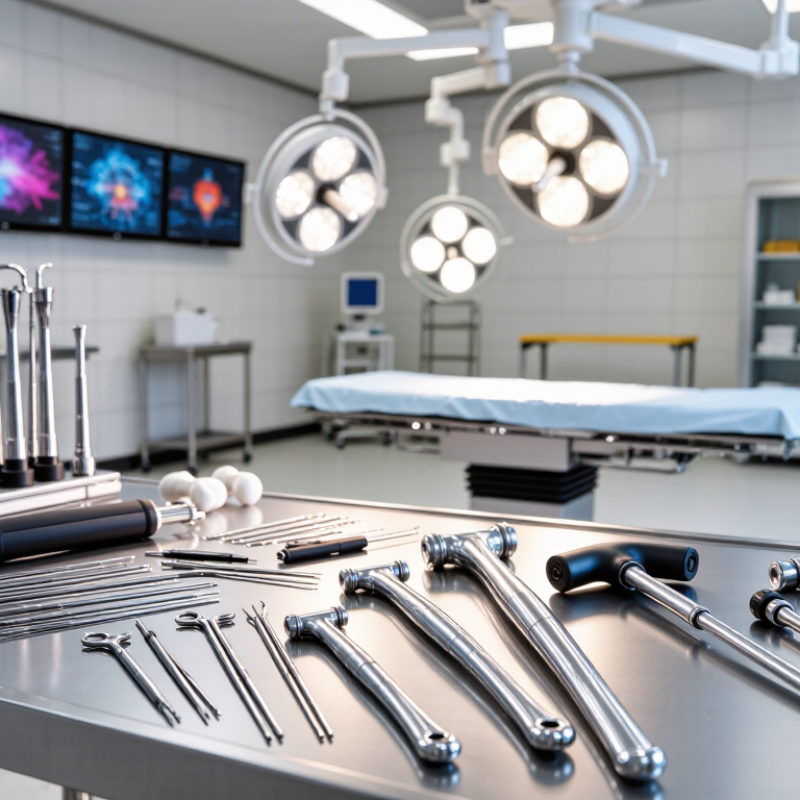
China’s top ten orthopedic surgical instrument manufacturers should be ranked through evidence, not visibility alone. The scope includes instruments for trauma, joint, spine, sports medicine, and minimally invasive procedures. It excludes general laboratory tools and unrelated medical supplies. A reliable review examines factory capabilities, quality systems, product documentation, and clinical suitability.
The scoring should give strong weight to regulatory compliance, material traceability, sterilization compatibility, and manufacturing consistency. Inspectors should review stainless steel grades, surface finishing, joint movement, and corrosion resistance. In an operating room, a loose handle or rough edge is not a minor detail. Product portfolios should cover practical instrument sets, not only attractive catalog images. After-sales training, repair response, export documentation, and inventory stability also matter.
Evidence must come from certificates, audit records, technical files, and verified customer feedback. Independent testing can support claims about strength, cleaning durability, and dimensional accuracy. Research investment and cooperation with hospitals may show deeper expertise, but published evidence should be checked carefully. No scoring model is flawless. A polished website can conceal uneven production. A smaller supplier may offer better support than a larger one. Ranking decisions should record these uncertainties, explain the weighting, and separate verified performance from reasonable assumptions.
China Top 10 Orthopedic Surgical Instrument Manufacturers
China’s orthopedic surgical instrument industry is moving from cost-driven production toward precision, traceability, and clinical cooperation. Manufacturers now supply bone plates, screws, spinal systems, external fixators, drills, and powered tools for hospitals worldwide. The market is supported by expanding trauma care, aging populations, and stronger domestic demand for joint replacement and spinal procedures.
A credible top-ten assessment should examine more than production volume. Useful indicators include CNC machining accuracy, titanium and stainless-steel control, sterilization compatibility, batch traceability, and surgeon feedback. Factory audits should review cleanroom practices, calibration records, packaging tests, and complaint handling. Product registration and export documentation also matter. They reveal operational maturity.
Not every ranking is reliable. Public sales data can be incomplete, while some factories publish impressive claims without enough clinical evidence. Buyers should request test reports, sample instruments, and manufacturing records. A plate may look polished but still fail under repeated loading. Small details matter, such as screw thread consistency and instrument grip balance. Clinical teams often notice these issues during a long operation.
China’s leading manufacturers increasingly invest in robotic assistance, digital design, surface treatment, and rapid prototyping. Yet technology alone does not guarantee safer surgery. Training, after-sales support, and stable supply remain decisive. Regional differences also deserve attention. Large hospitals may demand complex systems, while smaller facilities often prioritize affordability and simple maintenance. The market is growing, but quality comparisons still require careful, independent verification.
China’s population aged 65 and above increased from 12.6% in 2019 to 15.6% in 2024. This demographic trend is a measurable demand-side indicator for orthopedic surgery, implants, rehabilitation, and related surgical instruments. The figures are from China’s National Bureau of Statistics annual population releases and do not represent sales or market shares of individual manufacturers.
China’s top ten orthopedic surgical instrument manufacturers represent a broad and evolving supply base. One profile focuses on trauma fixation systems, including plates, screws, and drill guides for fracture care. Another specializes in spinal instruments, with retractors, cages, and controlled insertion tools. A third develops joint replacement instruments, where trial components and alignment guides demand careful dimensional control. Several manufacturers concentrate on arthroscopy, producing cannulas, punches, graspers, and shavers for minimally invasive procedures.
The remaining profiles include suppliers of external fixation frames, powered surgical tools, bone-cutting instruments, and navigation-assisted systems. Some combine machining with in-house testing, using digital calipers, torque checks, and simulated bone models during quality review. Others rely on hospital feedback to refine handle balance, sterilization compatibility, and instrument visibility under operating lights. These details matter more than polished catalog language.
Experience varies across this group. A manufacturer may produce accurate implants yet provide weak training support. Another may offer responsive service but limited evidence from independent clinical settings. Buyers should examine traceability records, material certificates, validation reports, and post-market monitoring practices. Regulatory approval is important, but it does not replace surgeon feedback or practical operating-room trials. The ranking can also change as evidence develops. A careful profile should admit that limitation. Words like “best” need measurable criteria, not assumption.
China’s leading orthopedic surgical instrument manufacturers serve a market shaped by rising musculoskeletal disease. The World Health Organization estimates that 1.71 billion people live with musculoskeletal conditions worldwide. Their core portfolios include trauma plates, intramedullary nails, spinal systems, joint replacement tools, arthroscopy instruments, and surgical power equipment.
Technology is becoming more practical. Computer-assisted navigation can improve implant positioning during complex joint procedures. Some manufacturers also combine 3D planning with patient-specific guides. These tools may reduce repeated trial fitting in the operating room. However, digital guidance is not automatically better. Poor imaging, weak training, or unsuitable software can still affect decisions. That gap deserves scrutiny.
Clinical value remains the real test. Trauma instruments must support stable fixation through small incisions and difficult anatomy. Arthroscopy systems need clear visualization, controlled fluid management, and reliable grasping. Joint replacement instruments require accurate cutting blocks and consistent alignment. The 2024 Grand View Research orthopedic devices analysis valued the global market at approximately USD 47 billion in 2023. Yet market growth does not prove clinical superiority. Hospitals should compare sterilization records, material traceability, surgeon feedback, revision data, and maintenance response. WHO guidance also stresses rehabilitation and long-term function, not only surgical completion. A well-designed instrument can feel simple in a crowded operating room. That simplicity often reflects careful engineering.
| Rank | Manufacturer Profile | Primary Product Portfolio | Common Materials | Key Manufacturing Technologies | Typical Clinical Applications | Instrument Design Features | Quality and Compliance Focus |
|---|---|---|---|---|---|---|---|
| 1 | Manufacturer Profile 01 | Bone plates Screws Drill guides Basic instrument sets | Titanium alloys, stainless steel, cobalt-chromium alloys, engineering polymers for handles and guides. | CNC machining, precision milling, laser marking, passivation, electropolishing, and surface finishing. | Fracture fixation of the upper and lower limbs, including trauma procedures requiring plates and cortical or cancellous screws. | Anatomic contours, locking-hole compatibility, depth gauges, torque-limiting drivers, and modular trays. | Dimensional inspection, material traceability, cleaning validation, packaging control, and medical-device quality-system documentation. |
| 2 | Manufacturer Profile 02 | Intramedullary nail instruments Targeting arms Reamers Extraction tools | Implant-grade stainless steel, titanium alloys, hardened tool steel, and sterilizable polymers. | Multi-axis CNC turning, jig and fixture production, laser calibration marks, and corrosion-resistant treatment. | Femoral, tibial, and humeral fracture procedures using intramedullary fixation systems. | Radiolucent targeting options, alignment references, controlled reaming interfaces, and dedicated extraction mechanisms. | Functional testing of targeting accuracy, fatigue-resistant instrument construction, corrosion testing, and lot-level inspection. |
| 3 | Manufacturer Profile 03 | Spinal surgery instruments Pedicle screw tools Rod benders Retractors | Titanium alloys, stainless steel, cobalt-chromium alloys, PEEK components where appropriate, and medical-grade silicone accessories. | Precision turning, wire EDM, controlled polishing, modular assembly, and reusable-instrument validation. | Posterior spinal fixation, decompression, deformity correction, and minimally invasive spinal access. | Ergonomic handles, color or size coding, controlled insertion depth, rod-contouring control, and radiographic compatibility where required. | Cleaning and sterilization compatibility, dimensional verification, assembly checks, and traceable inspection records. |
| 4 | Manufacturer Profile 04 | Joint-replacement instruments Bone saw guides Trial components Impactors | Stainless steel, titanium alloys, cobalt-chromium alloys, aluminum alloys for non-implant components, and polymer trial materials. | High-precision CNC machining, tight-tolerance grinding, electropolishing, and modular instrument-set assembly. | Total knee and hip arthroplasty, trial reduction, bone preparation, alignment, and implant positioning. | Precise cutting blocks, alignment rods, trial sizing, modular handles, and controlled impaction surfaces. | Dimensional accuracy, instrument-to-implant interface verification, sterilization resistance, and usability evaluation. |
| 5 | Manufacturer Profile 05 | Arthroscopy tools Cannulas Graspers Shaver accessories | Stainless steel, anodized aluminum, medical-grade polymers, optical components, and silicone seals. | Micro-machining, tube forming, laser welding, precision grinding, sealing, and leak testing. | Knee, shoulder, ankle, wrist, and hip arthroscopy for soft-tissue repair and minimally invasive procedures. | Low-profile shafts, smooth insertion surfaces, secure locking mechanisms, irrigation compatibility, and ergonomic actuation. | Leak resistance, surface cleanliness, repeated-use durability, sterilization-cycle testing, and functional inspection. |
| 6 | Manufacturer Profile 06 | External fixation instruments Clamps Carbon-fiber accessories Pin insertion tools | Stainless steel, titanium alloys, aluminum alloys, carbon-fiber-reinforced components, and engineering polymers. | Precision casting or forging, CNC finishing, anodizing, torque testing, and modular frame assembly. | Complex fractures, open fractures, temporary stabilization, limb lengthening, and deformity correction. | Adjustable clamps, radiolucent frame elements, pin-depth control, modular connectors, and tool-free or low-tool adjustments. | Mechanical load testing, clamp-locking verification, corrosion resistance, and compatibility assessment across frame components. |
| 7 | Manufacturer Profile 07 | Small-bone instruments Hand and foot plates Fine forceps Miniature drills | Titanium alloys, stainless steel, cobalt-chromium alloys, and sterilizable polymer grips. | Micro-CNC machining, fine blanking, laser cutting, miniature grinding, and controlled deburring. | Hand, wrist, foot, ankle, maxillofacial, and other procedures requiring small implants or delicate instrumentation. | Low-profile designs, small-diameter screwdrivers, atraumatic tips, compact retractors, and fine depth measurement. | Edge and burr control, dimensional inspection under magnification, corrosion testing, and repeated-use durability checks. |
| 8 | Manufacturer Profile 08 | Trauma instrument sets Reduction tools Bone levers Retractors | Stainless steel, titanium alloys, aluminum alloys, and medical-grade polymer components. | Forging, CNC machining, heat treatment, passivation, laser identification, and custom tray configuration. | General orthopedic trauma, reduction, fixation, revision procedures, and emergency fracture management. | Modular system architecture, radiographic markers, quick-connect handles, multiple instrument sizes, and organized trays. | Instrument completeness checks, surface-finish control, sterilization-tray validation, and clear identification of reusable components. |
| 9 | Manufacturer Profile 09 | Patient-specific guides Cutting blocks Drill templates Surgical planning accessories | Medical-grade polymers, stainless steel, titanium alloys, and additive-manufactured biocompatible materials where validated. | CAD/CAM design, additive manufacturing, CNC finishing, digital inspection, and image-based design verification. | Complex deformity correction, revision surgery, tumor-related reconstruction, and selected joint-replacement planning workflows. | Patient-matched geometry, anatomical registration features, controlled guide surfaces, and procedure-specific orientation markers. | Design-control documentation, dimensional validation, material verification, cleaning or single-use labeling controls, and process traceability. |
| 10 | Manufacturer Profile 10 | Powered instruments Drill systems Saw attachments Reusable accessories | Stainless steel, titanium alloys, aluminum alloys, engineering polymers, elastomers, and rechargeable battery-system materials. | Precision machining, gear and bearing assembly, motor-system integration, surface treatment, electrical safety testing, and torque calibration. | Bone drilling, sawing, reaming, arthroplasty preparation, trauma fixation, and other procedures requiring controlled powered cutting. | Variable-speed control, quick-change attachments, guarded cutting interfaces, ergonomic balance, and battery or pneumatic compatibility. | Electrical or pneumatic safety testing, noise and vibration evaluation, sterilization compatibility, torque output verification, and preventive-maintenance guidance. |
China’s top 10 orthopedic surgical instrument manufacturers should be judged by evidence, not promotional rankings. A reliable supplier should maintain ISO 13485 certification with a clearly stated scope. That scope must include the relevant orthopedic instruments. Check registration records, audit dates, and certificate validity. For products entering China, confirm applicable NMPA requirements. For overseas markets, review the required regulatory pathway instead of treating CE marking as universal approval.
Quality control should be visible on the production floor. Inspectors should measure tip alignment, jaw closure, surface finish, and handle movement. Ask for material certificates, cleaning instructions, sterilization validation, and batch traceability. Packaging should protect sharp edges during transport. A complete technical file may include risk management under ISO 14971 and biocompatibility evidence under ISO 10993, where applicable. Request sample instruments and test them with surgical staff. Small defects become obvious then. Supplier selection also depends on complaint handling, response time, spare-part access, and change-control procedures. A low quotation can hide weak documentation or inconsistent machining. Certification alone is not enough. I would still question certificates that look current but lack verifiable scope. One overlooked detail matters: confirm whether the manufacturer or a trading company controls final inspection. That distinction can affect accountability, delivery consistency, and corrective action after a field issue.
Common products include bone plates, screws, spinal systems, drills, powered tools, and external fixators. Joint replacement tools are also widely produced.
Review machining accuracy, material control, sterilization compatibility, and batch traceability. Factory audits should examine calibration records, packaging tests, and complaint handling.
No. A polished instrument may still fail under repeated loading. Thread consistency and grip balance deserve careful inspection.
Ask for test reports, samples, material certificates, manufacturing records, and registration documents. Verify whether final inspection happens inside the factory.
Manufacturers increasingly use digital design, rapid prototyping, navigation tools, and patient-specific guides. These tools can reduce repeated fitting during surgery.
No. Poor imaging, limited training, or unsuitable software may still affect decisions. Technology helps, but it does not replace judgment.
It should support stable fixation, accurate alignment, controlled movement, and reliable handling. Simple operation matters in a crowded operating room.
Request quality-system certification, registration records, sterilization validation, cleaning instructions, risk documentation, and biocompatibility evidence when applicable.
Hospitals may need spare parts, maintenance, training, and fast complaint responses. A small delay can disrupt an operating schedule.
Some rankings rely on incomplete sales data or impressive claims. I would still verify every claim independently. A certificate alone is not enough.
This article presents a structured overview of China’s orthopedic surgical instrument industry, explaining the scope and criteria used to evaluate leading manufacturers. It examines market development, production capabilities, research and development strength, product reliability, manufacturing capacity, and service support. The discussion also introduces ten representative Chinese manufacturers without focusing on brand promotion, highlighting their roles in supplying instruments for trauma surgery, joint procedures, spinal treatment, sports medicine, and other orthopedic applications.
In addition, the article reviews common product categories, material technologies, precision manufacturing processes, and clinical use requirements. It explains how quality management systems, regulatory compliance, product testing, sterilization compatibility, and traceability influence purchasing decisions. By comparing these factors, hospitals, distributors, and medical procurement teams can better assess an orthopedic surgical instruments manufacturer according to safety, performance, customization capability, delivery stability, and after-sales support. The overall goal is to provide a practical and balanced reference for understanding China’s orthopedic instrument manufacturing landscape.