0%

Choosing among orthopedic implant manufacturers in China requires more than comparing product catalogs or factory size. An implant may look straightforward in a brochure, yet its design, material specifications, production controls, and clinical support all affect how it performs in practice. This guide explores who may deserve consideration and explains how to assess manufacturers using evidence rather than promotional claims.

A useful comparison examines the implant range, quality-management systems, product traceability, available clinical evidence, and regulatory documentation relevant to the intended market. Buyers should also consider whether a company can provide clear technical files, consistent communication, and dependable support after delivery. Ask specific questions. For example, request current certificates, product specifications, and information about manufacturing controls; then confirm details with qualified professionals and the relevant authorities. Requirements can differ by product and destination.

A high-profile brand is not automatically the right fit, and a lower price alone says little about long-term value. That matters. Company capabilities and product portfolios can change, so any shortlist should be checked against current records. No list stays perfect. This overview is intended as a starting point, not a substitute for clinical judgment, independent verification, or a careful review of each device’s intended use. The goal is a balanced view of orthopedic implant manufacturers in China, with practical criteria that help readers ask better questions and make more informed comparisons.
Who Are the Best Orthopedic Implant Manufacturers in China

What Orthopedic Implants Include: Trauma, Spine, and Joint-Replacement Devices

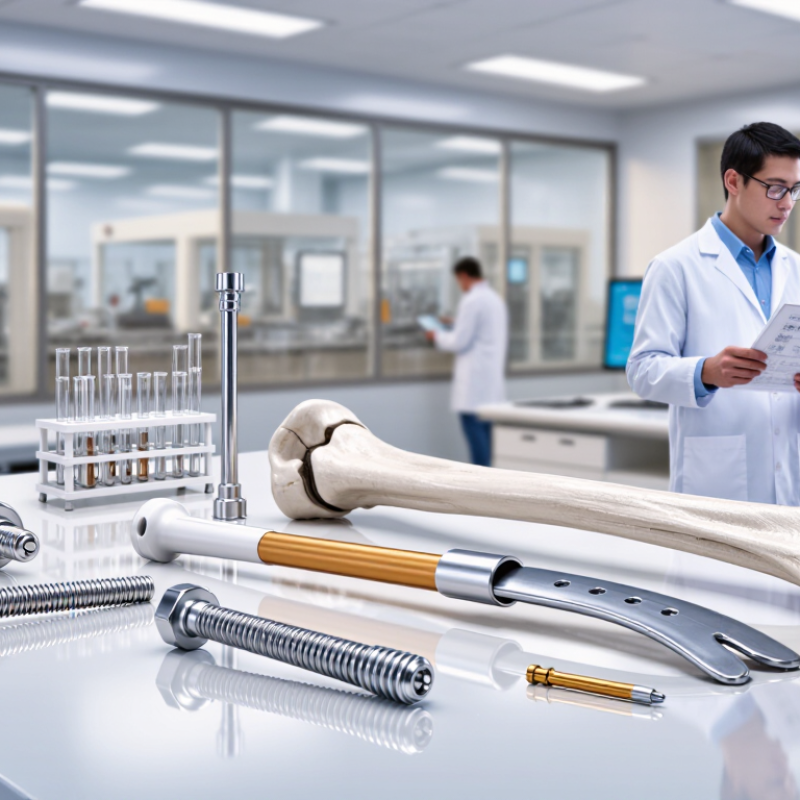
Orthopedic implants cover three distinct clinical needs: trauma fixation, spinal stabilization, and joint replacement. Trauma devices include plates, screws, and intramedullary nails that hold fractured bones in position while they heal. Spine systems use screws, rods, cages, or artificial discs to support or replace spinal structures. Hip and knee implants replace damaged joint surfaces with components designed to restore movement and reduce pain. Fit matters.

The World Health Organization estimates that 1.71 billion people worldwide live with musculoskeletal conditions. That figure describes a broad burden, not the number of people who need surgery. Grand View Research estimated the global orthopedic implants market at USD 47.7 billion in 2023, reflecting demand across several device categories. Market estimates depend on how analysts define and group products.

For buyers assessing Chinese manufacturers, category-specific evidence matters more than a broad “orthopedic” label. Ask whether the company produces trauma plates, spinal systems, or joint components, and review its material specifications, manufacturing controls, and traceability records. Not interchangeable. A titanium spinal screw and a knee bearing face different design and testing demands. Even useful catalog comparisons can hide differences in indications, sizes, and evidence quality; those details deserve closer review.

China’s Joint-Implant Market: 2021 National VBP Cut Prices by an Average 82%

China’s joint-implant market shifted sharply after the 2021 national volume-based procurement (VBP) for artificial hip and knee joints. Procurement results published by China’s National Healthcare Security Administration (NHSA) showed an average price reduction of about 82% from pre-procurement prices. The change put selected implants under centralized purchasing by participating public hospitals. For procurement teams, it made price comparisons more direct. The cut was substantial. But the headline is not the whole story.

An 82% reduction does not mean every implant, hospital bill, or patient’s out-of-pocket cost fell by the same amount. NHSA’s figure concerns negotiated implant prices; surgery, hospitalization, and clinical choices remain separate factors. When assessing manufacturers, buyers should review product registration, material specifications, clinical evidence, batch traceability, and instrument support—not price alone. Supply continuity matters in the operating room. Surgeon familiarity matters too, but it varies by hospital and deserves careful review.

Tips: Ask suppliers to clarify VBP award scope, current supply terms, and lot-level traceability. Check whether a quotation separates implant costs from hospital and procedure charges. A low bid can be compelling; it still needs scrutiny.

Major Chinese Manufacturers: WEGO, Chunli, AK Medical, and Double Medical

China’s orthopedic implant market includes manufacturers with broad product portfolios, alongside firms focused on joint or spine systems. Comparing them takes more than checking a catalogue. Review published clinical evidence, material specifications, instrument compatibility, and the availability of technical support. Ask how implant batches are traced and how product changes are documented. These details matter in a real operating room, where a poorly matched instrument can slow a procedure. A large product range can be useful, but it does not prove that every device suits every patient.

Hospitals and distributors should also examine quality-management records and request clear documentation for each product category. Compare the evidence with the intended use, not just a supplier’s presentation. Surgeon feedback can add context, though it may reflect local experience rather than broad results. That distinction is easy to miss. Even a careful assessment has limits when independent data are scarce.

Tips: Request sample instruments for a hands-on fit check. Confirm training, replacement-part availability, and response times before procurement. A polished brochure is not proof; verify claims against technical documents and clinical evidence. That judgment can still be wrong, so record uncertainties before making a decision.

How to Compare Manufacturers: NMPA Class III Registration and Product Portfolios

When comparing orthopedic implant manufacturers in China, verify NMPA Class III registration for each device, not just the company. Class III devices require registration before marketing in China. Check the certificate against the exact model, approved indications, registration holder, and manufacturing site. Confirm its current status and any relevant changes through official NMPA records. A certificate is a starting point, not a quality verdict.

Look beyond catalog size. Compare whether the portfolio covers the procedures you need, such as fracture fixation, joint replacement, or spinal implants. Check that implant sizes, compatible instruments, and approved indications match your clinical and purchasing requirements. Request current instructions for use, technical specifications, sterilization details, and traceability information. A wide catalog can still have gaps. That is easy to miss.

Operational evidence matters too. Review quality-system audit scope, batch records, complaint handling, and change-control practices. Ask how instrument availability and lead times are managed. Compare equivalent products, rather than unlike devices grouped under one category. A spreadsheet can make this look simpler than it is. If documents conflict or leave questions unanswered, pause and seek clarification from qualified regulatory or clinical reviewers.

Comparing Orthopedic Implant Manufacturers in China

NMPA device-class examples for common orthopedic implant categories

These implant categories are commonly regulated as Class III medical devices in China. When comparing manufacturers, verify each product’s NMPA registration certificate, approved indications, and registration status. Classification depends on the specific product and intended use; consult the applicable NMPA classification catalog.

Quality Benchmarks: ISO 13485 and ISO 5832 Implant-Material Standards

Who Are the Best Orthopedic Implant Manufacturers in China

Quality Benchmarks: ISO 13485 and ISO 5832 Implant-Material Standards

For orthopedic implants, quality claims should be checked against documented controls. ISO 13485:2016 sets requirements for medical-device quality management, including design controls, supplier oversight, and traceability. It does not certify that every implant performs well in patients. ISO’s 2022 Survey recorded 33,362 ISO 13485 certificates across 87 countries and economies. This shows broad adoption, not a ranking of manufacturers or a guarantee of product quality.

ISO 5832 is a series of standards for metallic implant materials. Its parts specify requirements for materials such as stainless steel, titanium alloys, and cobalt-chromium alloys. Buyers can compare material test reports with the relevant part, then check chemical composition and mechanical properties against the stated limits. Ask whether the records identify the production lot and connect it to the finished device. That detail matters.

Paperwork can look tidy. Reality is messier. A material certificate alone cannot show that machining, cleaning, and final inspection were controlled. Request evidence of batch traceability, validated processes, and nonconformance handling. These checks help distinguish a mature quality system from a certificate displayed on a wall. ISO standards set useful benchmarks, but careful review of actual records remains essential.

Who Are the Best Orthopedic Implant Manufacturers in China? Quality Benchmarks: ISO 13485 and ISO 5832 Implant-Material Standards

A neutral, evidence-based comparison framework. It identifies what to verify—not a ranking of named manufacturers.

Quality dimension Relevant benchmark Evidence to request or verify How to interpret it
Medical-device quality management ISO 13485 quality management system requirements for medical devices Current certificate; certification scope; covered manufacturing site(s); issuing certification body; validity and surveillance status System-level evidence
A certificate supports assessment of the quality system, but does not by itself prove that a specific implant is compliant or clinically effective.
Implant material specification Applicable part of the ISO 5832 series for metallic materials for surgical implants Material designation and applicable standard part; material test reports; chemical composition and mechanical-property results; supplier and lot identification Material-specific
The correct part depends on the alloy and product form. Examples include ISO 5832-1 for wrought stainless steel, ISO 5832-2 for unalloyed titanium, and ISO 5832-3 for wrought Ti-6Al-4V.
CoCr implant material Relevant ISO 5832 requirements for the specific cobalt-chromium alloy and product form Declared alloy and form; applicable standard part; batch-level test results; traceability from incoming material to finished device Do not assume one part applies to every CoCr component. For example, ISO 5832-4 addresses cast cobalt-chromium-molybdenum alloy, while ISO 5832-12 addresses wrought cobalt-chromium-molybdenum alloy.
Product authorization in China Applicable National Medical Products Administration (NMPA) registration or filing requirements Product-specific registration or filing information; product name and model; registrant and manufacturing-site details; current status in official records Check the specific product and its authorization status. A company-level certificate is not a substitute for product-specific regulatory verification.
Manufacturing controls and traceability Documented controls within the quality management system Device and material lot records; process-validation records where required; inspection criteria; nonconformance and corrective-action procedures Strong traceability should link finished-device records to the relevant material batch and controlled manufacturing operations.
Sterilization and packaging Validated processes appropriate to the product’s labeled sterile or non-sterile condition Sterilization validation and routine-control records, where applicable; packaging validation; shelf-life and label information Confirm that the evidence matches the marketed product, packaging configuration, and stated storage conditions.
Biological and device-level evaluation Applicable biological-safety and medical-device evaluation requirements, in addition to material specifications Product-specific evaluation reports; risk-management documentation; evidence supporting intended use and patient-contact conditions Compliance with an ISO 5832 material specification does not alone establish the safety or performance of the complete implant.
Post-market quality feedback Complaint handling, vigilance, corrective action, and continual-improvement processes Documented complaint and investigation processes; relevant corrective-action records; procedures for handling safety signals and product feedback Assess whether issues are investigated and addressed systematically; request relevant evidence through an appropriate, confidential audit process.

Use of this table: ISO 13485 evaluates a quality management system, while the ISO 5832 series specifies requirements for certain metallic implant materials. Applicable requirements depend on the product, material, manufacturing form, and intended use. Verify certificates and regulatory records with the issuing body or relevant official source; this framework does not constitute a manufacturer ranking or certification.

FAQS

What are the main types of orthopedic implants?

They include trauma fixation devices, spinal systems, and joint replacements. Each serves a different clinical need.

What do trauma implants do?

Plates, screws, and intramedullary nails hold fractured bones in position while they heal. Fit matters.

What devices are used in spinal systems?

Spinal systems may use screws, rods, cages, or artificial discs to support or replace spinal structures.

How do hip and knee implants help?

They replace damaged joint surfaces with components designed to restore movement and reduce pain. Results can vary.

Can implant categories be compared as if they were interchangeable?

No. A spinal screw and a knee bearing face different design and testing demands. Not interchangeable.

What should buyers check when assessing a manufacturer?

Review material specifications, manufacturing controls, traceability records, and evidence for the specific product category. Catalogues alone are not enough.

Why should hospitals check instruments and technical support?

Poorly matched instruments can slow a procedure. Check instrument fit, training, replacement-part availability, and response times before procurement.

What do the reported market and health figures mean?

The World Health Organization estimates that 1.71 billion people live with musculoskeletal conditions. That is not a surgery count. A 2023 market estimate valued orthopedic implants globally at USD 47.7 billion, but definitions differ.

Conclusion

Orthopedic implants include devices used in trauma care, spinal procedures, and joint replacement. These products support different clinical needs, so comparing orthopedic implant manufacturers in China requires more than looking at price or product range. Buyers and healthcare providers should consider whether a manufacturer offers relevant device categories, maintains consistent production quality, and has products registered as Class III medical devices with China’s National Medical Products Administration (NMPA).

China’s 2021 national volume-based procurement program for joint implants reduced prices by an average of 82%, reshaping purchasing priorities and increasing attention to cost and supply capacity. Quality assessment remains essential: ISO 13485 provides a framework for medical-device quality management, while ISO 5832 specifies requirements for metallic materials used in implants. Reviewing these benchmarks alongside registration status, portfolio suitability, and manufacturing capabilities can help stakeholders make a balanced assessment.

Clara

Clara

Clara is a professional marketing specialist with a strong understanding of the company’s products, their practical applications, and the needs of the customers they serve. She regularly contributes expert articles to the company website, sharing clear, useful insights on product features, industry......