Choosing an orthopedic implant factory in 2026 means evaluating more than product catalogs. Global buyers may compare original equipment manufacturers, contract manufacturers, specialist machining facilities, and vertically integrated producers. Each type offers a different balance of design support, production capacity, customization, and supply-chain control. Some factories focus on titanium implants. Others handle stainless steel, precision instruments, or multiple production stages under one roof.
The distinction matters. An orthopedic implant factory may use CNC machining, forging, additive manufacturing, or a carefully managed combination. Buyers should examine documented quality systems, material traceability, process validation, and inspection records. Ask how the factory controls each step, from incoming metal stock to finished components. A polished showroom is not proof. Neither is a long client list. W. Edwards Deming, a leading manufacturing quality expert, wrote, “Quality comes not from inspection, but from improvement of the production process.” That principle applies directly to implant production, where small process variations can affect fit and consistency.
This guide compares factory types and the capabilities global buyers should assess before shortlisting suppliers. It also considers production scale, engineering collaboration, lead times, and communication across borders. Details matter. A factory suited to a high-volume implant line may not fit a low-volume, custom project. And no category guarantees a good partnership. Buyers still need to verify claims, review relevant documentation, and ask difficult questions. That takes time. Sometimes, the best choice is less obvious than expected.
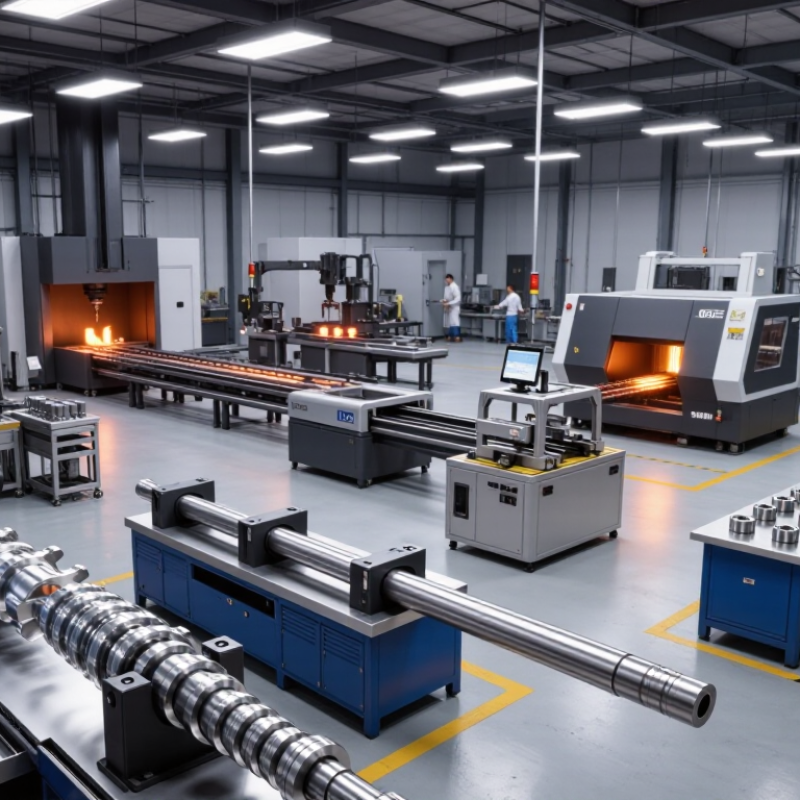
An orthopedic implant factory in 2026 is more than a machining floor. It is a controlled system that links material identity, design requirements, production records, inspection, and follow-up data. Grand View Research estimated the global orthopedic implants market at about USD 49.6 billion in 2023; market estimates differ by scope, but the scale makes reliable quality controls essential. Demand has a human context, too: the World Health Organization reports that about 1.71 billion people live with musculoskeletal conditions.
These figures do not define a capable factory. They show why consistency matters.
On the floor, that means verified titanium or cobalt-chromium stock, calibrated measuring tools, documented cleaning, and lot-level traceability. Where processes require controlled environments, monitoring should cover particles, temperature, and humidity—not just a clean-looking room. Validated machining and surface-treatment steps need acceptance criteria, while inspection records should connect each finished implant to its materials and process history. ISO 13485 provides a medical-device quality-management framework, but certification alone cannot prove every production step works well. No factory is perfect. A polished dashboard can still miss a recurring tool-wear issue unless engineers review trends and act on them. A credible supplier can explain its controls, show representative records, and describe how deviations are investigated without promising zero defects.
Which Factory Types Serve Different Orthopedic Implant Needs?
Factory choice should follow the implant’s design and production risks, not a broad “one-stop” label. The World Health Organization’s 2022 musculoskeletal health report estimates that 1.71 billion people live with musculoskeletal conditions worldwide. Their needs range from standard fixation screws to complex joint-replacement components. Fit matters.
Precision machining factories suit repeatable metal parts, such as bone plates, screws, and implant stems. They should show how they control dimensions, material traceability, and inspection records. Additive-manufacturing specialists can produce intricate porous structures that support bone integration, but each design still needs careful process validation. Integrated manufacturers may combine machining, finishing, cleaning, and packaging under one quality system. That can simplify coordination, though it does not automatically mean better quality. Factory categories overlap, and comparing suppliers is not always straightforward.
Tips: Ask for sample inspection records, material certificates, and evidence of process controls relevant to your device. For coated or specially finished implants, clarify whether the factory performs that step itself or uses a qualified partner. Check capability against the exact design—not just a general equipment list.
This chart is a qualitative guide to common manufacturing-route fit, not market-share data or a supplier audit. A value of 1 indicates a route commonly used for that implant need; 0 means it is not generally a primary route. Actual capabilities vary by facility, material, design, and regulatory scope. Additive manufacturing is used for selected complex and porous implants, while polymer routes commonly support spinal components and joint bearings.
An orthopedic implant factory’s production route usually follows its material and intended use. Metal-focused factories may forge titanium or cobalt-chromium blanks, then machine them into plates, screws, or joint components. Forging can refine the metal’s structure, while precision machining creates threads and contact surfaces. Some facilities also use additive manufacturing for porous features that encourage bone integration. Small details matter.
Ceramic specialists typically prepare fine powders, press them into shape, and sinter them at high temperatures. The resulting parts can be hard and wear-resistant, but brittle. Grinding and inspection therefore require careful control. Polymer-focused factories may mold or machine materials such as ultra-high-molecular-weight polyethylene. They must manage dimensions, surface finish, and compatibility with the planned sterilization method.
Factory labels can be misleading. A “titanium factory” may outsource coating, heat treatment, or final inspection. Buyers should ask which steps happen on site and how material batches and process records are traced. A clean-looking part is not proof of a controlled process. I have seen sourcing discussions focus heavily on unit price, while overlooking whether the factory can explain changes between production lots. That gap deserves a closer look.
| Typical factory type | Common product focus | Materials commonly used | Typical production methods | What buyers should verify |
|---|---|---|---|---|
| Large, integrated implant manufacturer | Broad portfolios such as trauma fixation, joint reconstruction, and spinal implants | Titanium and titanium alloys, cobalt-chromium alloys, implant-grade stainless steel, and UHMWPE for selected bearing components | CNC machining, forging or casting depending on component design, finishing, cleaning, inspection, and validated sterilization or packaging operations where applicable | Confirm which operations are performed in-house, applicable device approvals, material traceability, process validation, and product-specific quality records. |
| Trauma and fixation specialist | Plates, screws, nails, wires, and selected external-fixation components | Commercially pure titanium, Ti-6Al-4V ELI, and implant-grade stainless steel such as 316LVM, according to design and intended use | Bar-stock machining, turning, milling, forming, thread rolling or cutting, and surface finishing; porous or coated options may involve additional processes | Check dimensional controls for threads and plate features, alloy and heat-treatment documentation, fatigue testing where relevant, and compatibility claims for the intended system. |
| Joint reconstruction specialist | Hip, knee, and other joint replacement components, including selected revision or bearing components | CoCrMo alloys, titanium alloys, UHMWPE, and—in some designs—ceramic bearing materials | Precision machining, forging, investment casting for appropriate components, polymer molding or machining, ceramic processing, and controlled surface finishing | Request evidence for bearing-surface finish, dimensional consistency, material and lot traceability, wear or performance testing, and validated cleaning and packaging. |
| Spinal implant specialist | Pedicle-screw systems, rods, interbody devices, and selected spinal fixation products | Titanium alloys, commercially pure titanium, CoCr alloys for some rods, PEEK for selected interbody devices, and implant-grade stainless steel in certain products | CNC machining, precision turning, polymer machining or molding, and—in selected porous designs—metal additive manufacturing followed by finishing and inspection | Verify material grade, surface and pore specifications when applicable, connection tolerances, system-level testing, and the regulatory status of each product configuration. |
| Metal additive manufacturing specialist | Selected porous or geometrically complex implants, including certain spinal, acetabular, and patient-matched designs | Most commonly titanium alloys such as Ti-6Al-4V ELI; other alloys may be used when the process and product are qualified | Powder-bed fusion such as laser powder-bed fusion, followed by depowdering, heat treatment, machining of critical interfaces, surface finishing, and inspection | Ask for powder controls, build and post-processing records, validated cleaning of porous structures, inspection methods, and product-specific evidence for mechanical performance. |
| Contract or component manufacturing factory | Custom or outsourced components made to a customer's approved drawings and specifications | Depends on the customer specification; may include titanium alloys, stainless steel, CoCr alloys, PEEK, or UHMWPE | Often focused on CNC machining, turning, grinding, finishing, or molding; coating, sterilization, and final assembly may be handled by qualified external suppliers | Clarify legal manufacturer responsibilities, design ownership, change control, supplier qualification, device history documentation, and which party releases the finished device. |
Note: These are general manufacturing patterns, not fixed rules. Materials and processes vary by implant design, intended use, applicable standards, and regulatory approval. Verify the exact grade, specification, and process documentation for each product.
Global buyers should compare an orthopedic implant factory’s quality system, not just its production capacity. ISO 13485 certification can indicate a medical-device quality management system, but buyers should check its scope, validity, and site coverage. Does it include the specific implant family and manufacturing address? Ask to review audit findings, corrective-action records, and change-control procedures. A certificate is only a starting point.
For risk controls, compare documented use of ISO 14971 and relevant biocompatibility evidence under the ISO 10993 series. Request material certificates, lot traceability, and test reports for fatigue, corrosion, and dimensional tolerances. For sterile products, verify the validated sterilization process and packaging evidence. Check applicable ISO 11135 or ISO 11137 records, plus ISO 11607 packaging validation. Requirements depend on the product and intended market; a standards list alone does not prove compliance.
Not enough, though.
Audit the site where critical machining, cleaning, and inspection occur, since outsourced steps can create gaps. Ask how staff quarantine nonconforming parts, check calibrated gauges, and approve supplier changes. A polished audit folder may hide weak daily habits. Request an anonymized batch record and trace a component from incoming material to release.
A factory type should fit the sourcing goal, not just the target price. Buyers needing stable volumes may prefer a vertically integrated manufacturer with in-house machining, finishing, and inspection. Fewer handoffs can make process control easier to review. But integration alone does not prove consistent quality.
For specialized implants or smaller launch quantities, a focused contract manufacturer may offer more flexible production planning. Ask which processes happen on site, how material lots are traced, and whether inspection records match the implant and order.
Request a sample lot and review dimensional reports, surface-finish checks, and change-control procedures. Details matter. A factory with advanced equipment may still struggle with clear communication or delivery planning.
Compare realistic lead times, minimum order quantities, and capacity during peak periods. Then assess its quality system through current documentation and a site or remote audit. A low unit price can conceal added costs from rework, delayed approvals, or limited traceability.
Not always. Buyers should also admit where their own forecasts are uncertain; factories cannot plan well around frequent, unannounced changes. The strongest match is the one whose capabilities, evidence, and working rhythm fit the product’s actual sourcing needs.
It links materials, design requirements, production records, inspection, and follow-up data. A clean-looking floor alone proves little.
It should verify materials such as titanium or cobalt-chromium and connect each lot to production records. Ask to see it.
Records should link each finished implant to its material lot and process history. This helps teams investigate deviations.
Precision machining factories often make repeatable parts, such as plates, screws, and stems. Check dimensional controls and inspection records.
It can produce intricate porous structures designed to support bone integration. Each design still needs process validation. Not automatically.
Combining machining, finishing, cleaning, and packaging may simplify coordination. It does not prove that every step works well.
Where controlled conditions are needed, monitoring may include particles, temperature, and humidity. A spotless room is not enough.
Request material certificates, sample inspection records, and evidence of relevant process controls. Match the equipment to the exact design. A broad equipment list can mislead.
No. A quality-system certificate does not verify every step by itself. Review records and ask how recurring tool wear is detected.
Choosing the right orthopedic implant factory in 2026 starts with understanding the products, processes, and quality controls a buyer needs. Factories may specialize in standard implants, custom solutions, or particular production methods, and their capabilities can differ in materials, machining, forming, surface treatment, and inspection. Comparing these factors helps buyers assess whether a supplier can meet requirements for product complexity, consistency, and production volume.
Global buyers should also compare documented quality systems, traceability, testing practices, and communication during development and production. The best factory type depends on the sourcing goal: reliable repeat orders, specialized designs, flexible customization, or scalable manufacturing. By matching technical capabilities and quality processes to project needs, buyers can make a more informed partnership decision and support dependable orthopedic implant production.